01
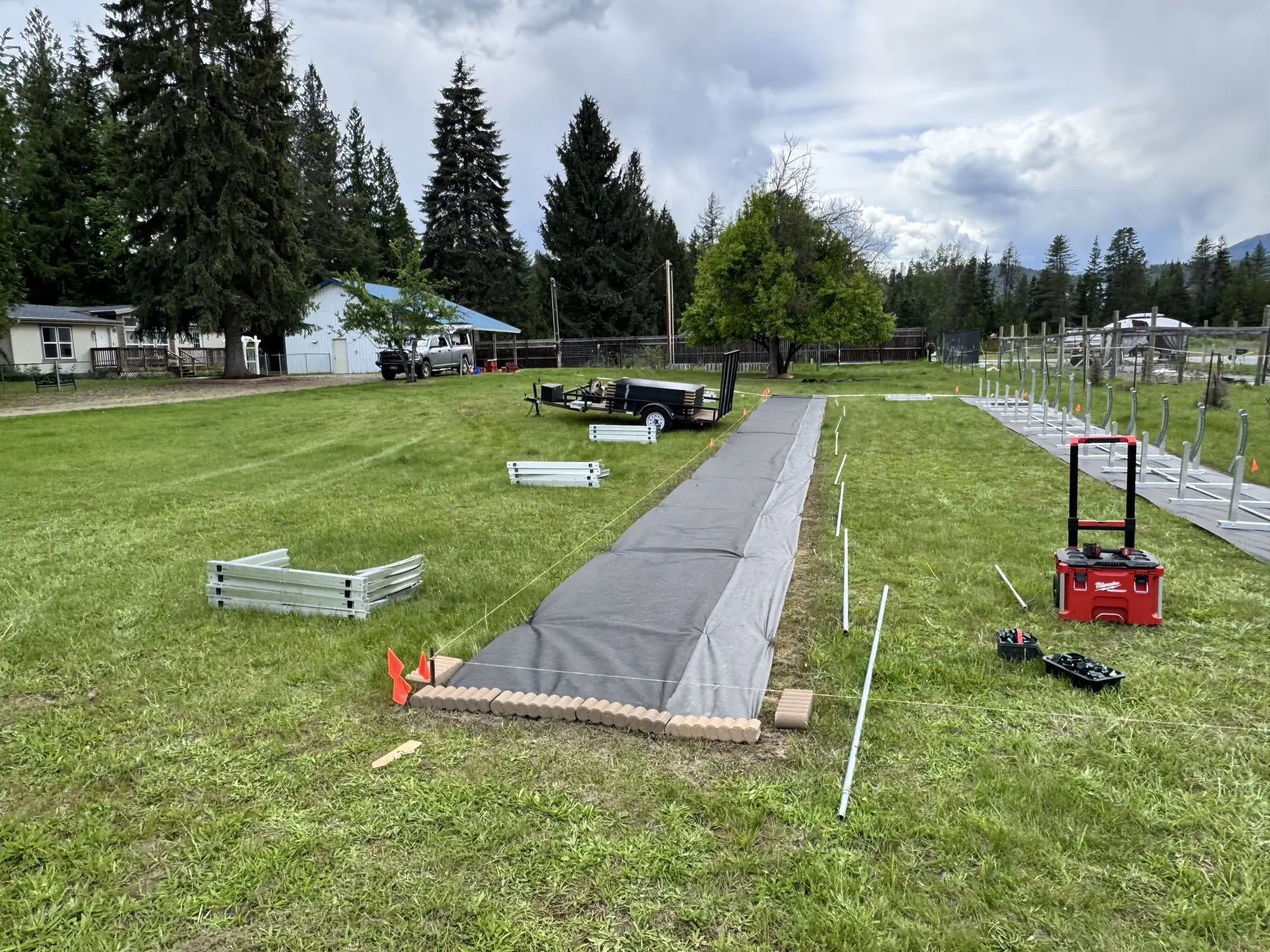
Site layout and racking preparation
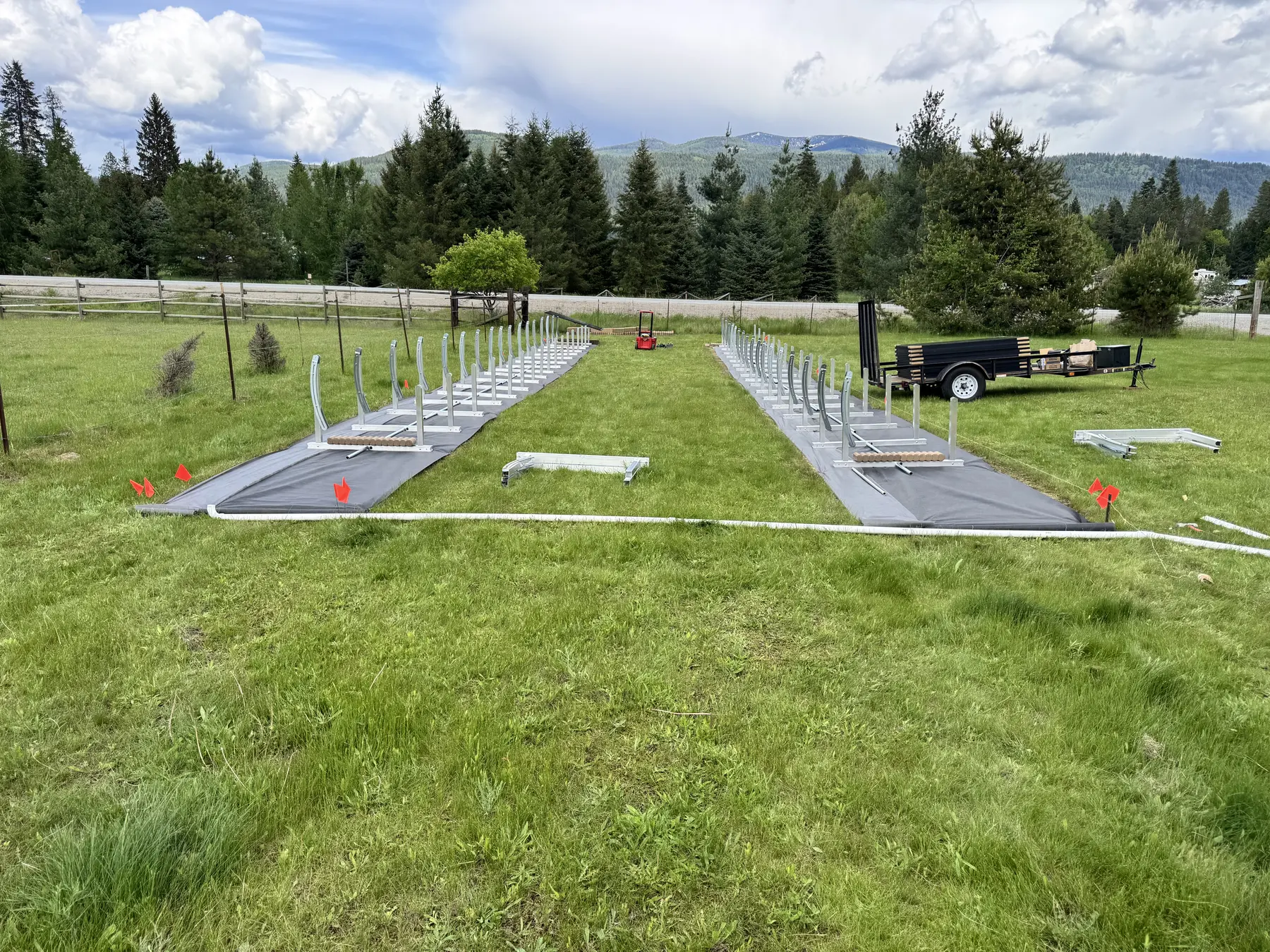
The project began by establishing two long ground-mount rows, staging the racking components, confirming the working footprint, and keeping the installation organized before the first panels went on.
Complete project case study
A real Big Bark project documented across every major phase: racking, panels, conduit routes, trenching, field wiring, equipment integration, labeling, and cleanup.
Project scope
This was more than setting panels in a field. The array, underground routes, exterior equipment, and inverter-and-battery wall all had to work together physically and remain understandable after the trenches were closed and the covers went on.
The project began by establishing two long ground-mount rows, staging the racking components, confirming the working footprint, and keeping the installation organized before the first panels went on.
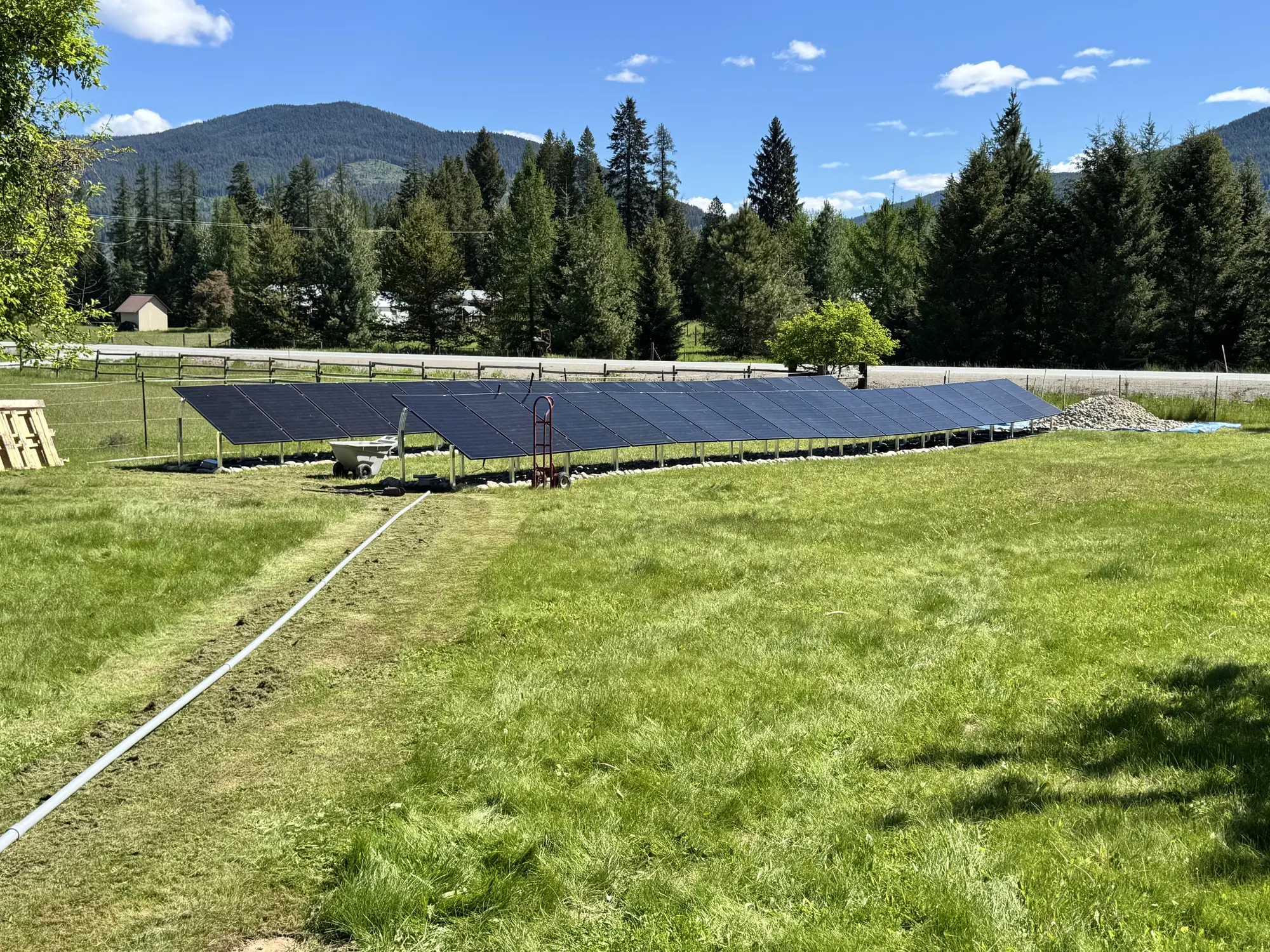
With the structure aligned, the panel rows were installed as a complete array. The wide site view also helped keep later conduit and equipment routes tied to the overall plan rather than treated as separate pieces.
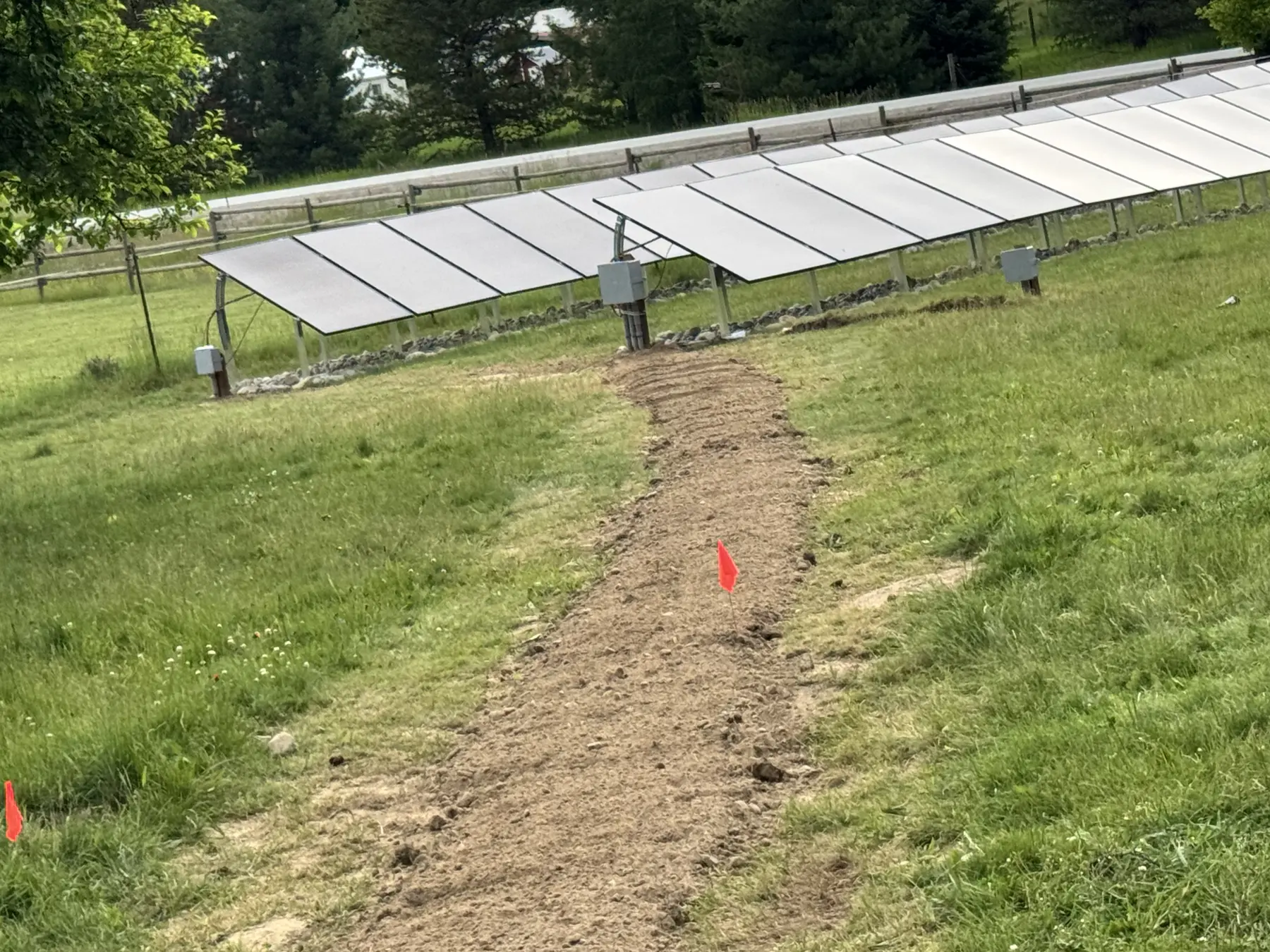
The route from the array to the equipment buildings was planned around the property, formed with clean sweeps where it stayed visible, trenched through the longer underground sections, and documented before backfill concealed the work.
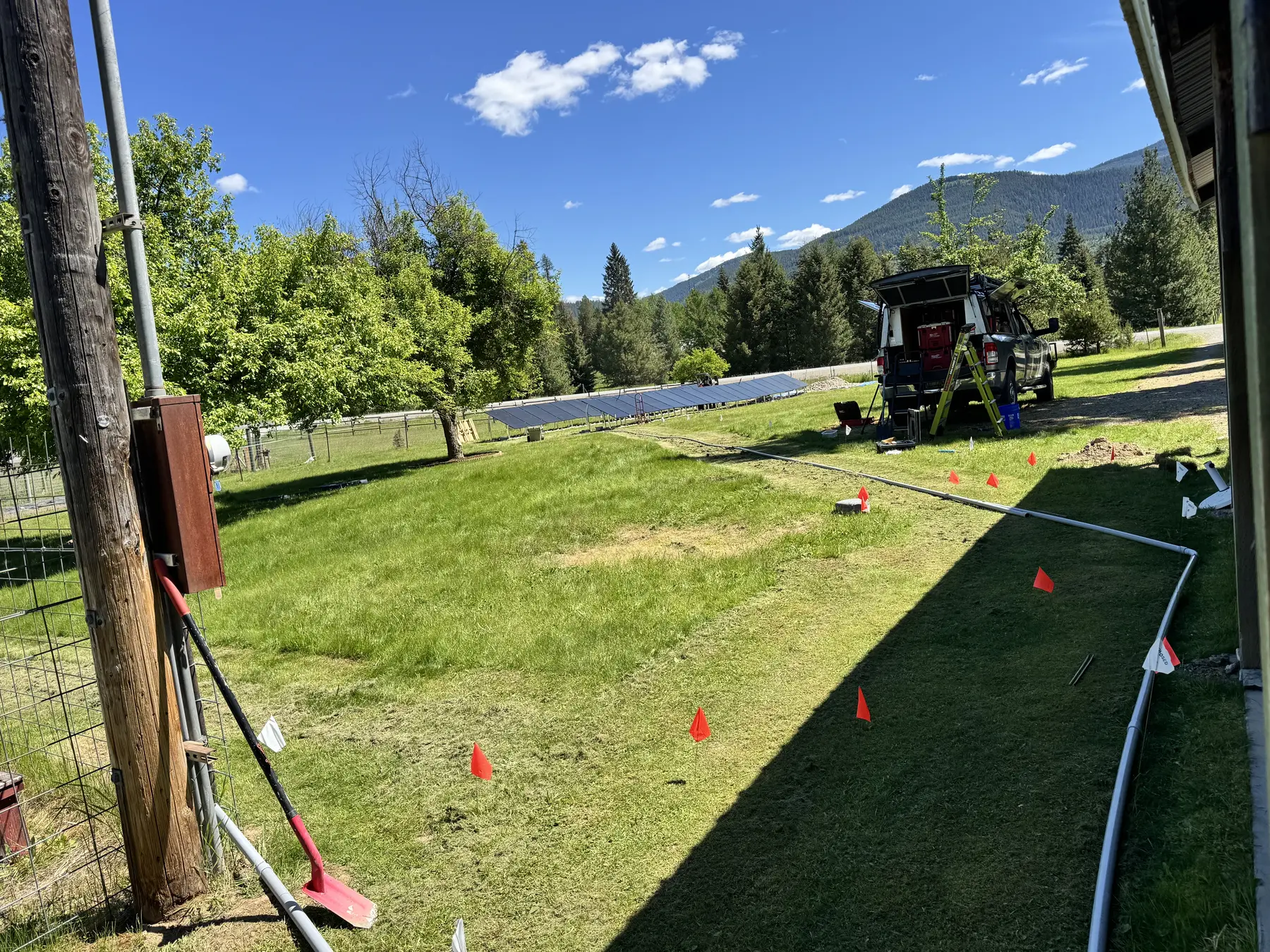
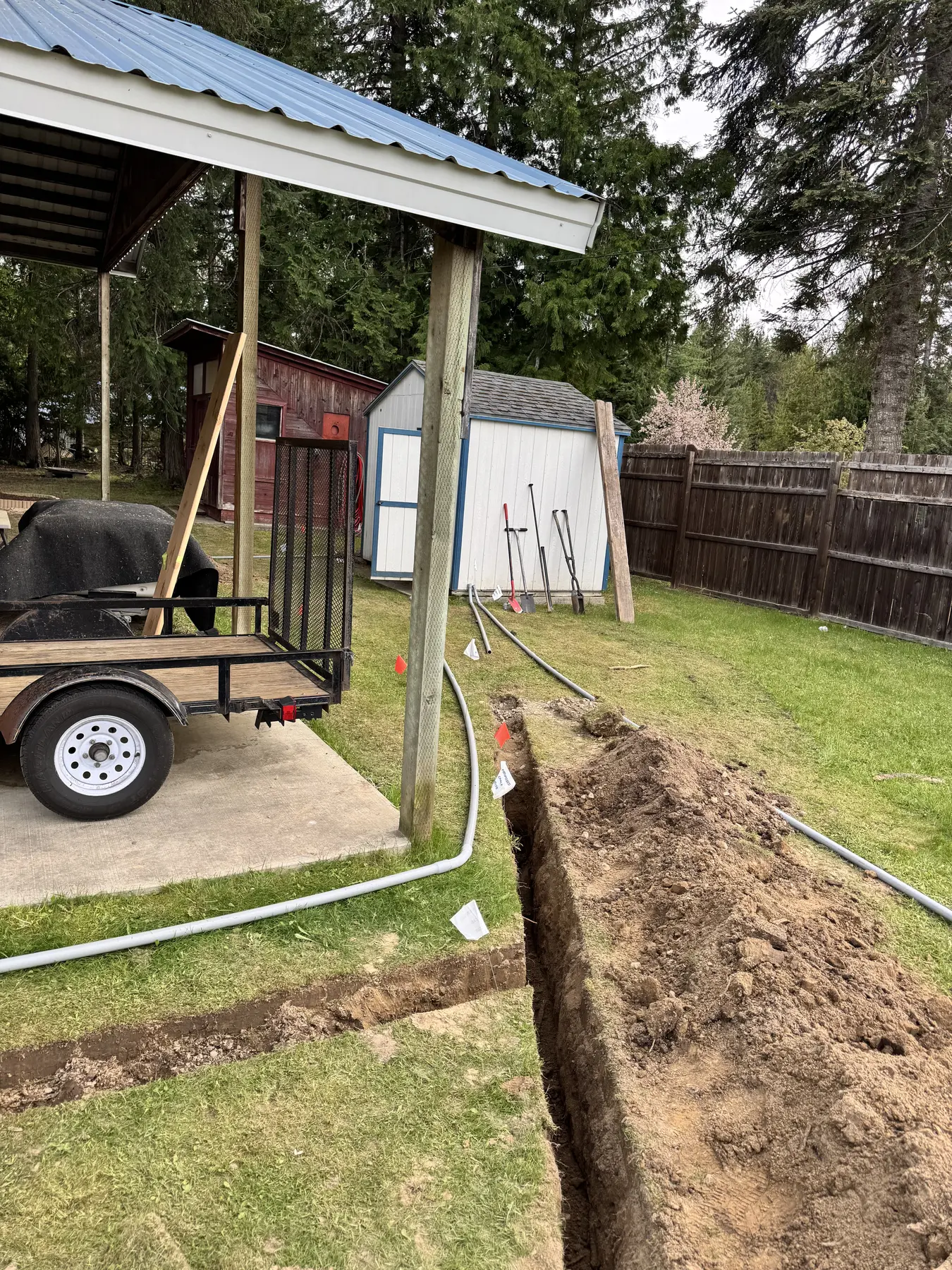
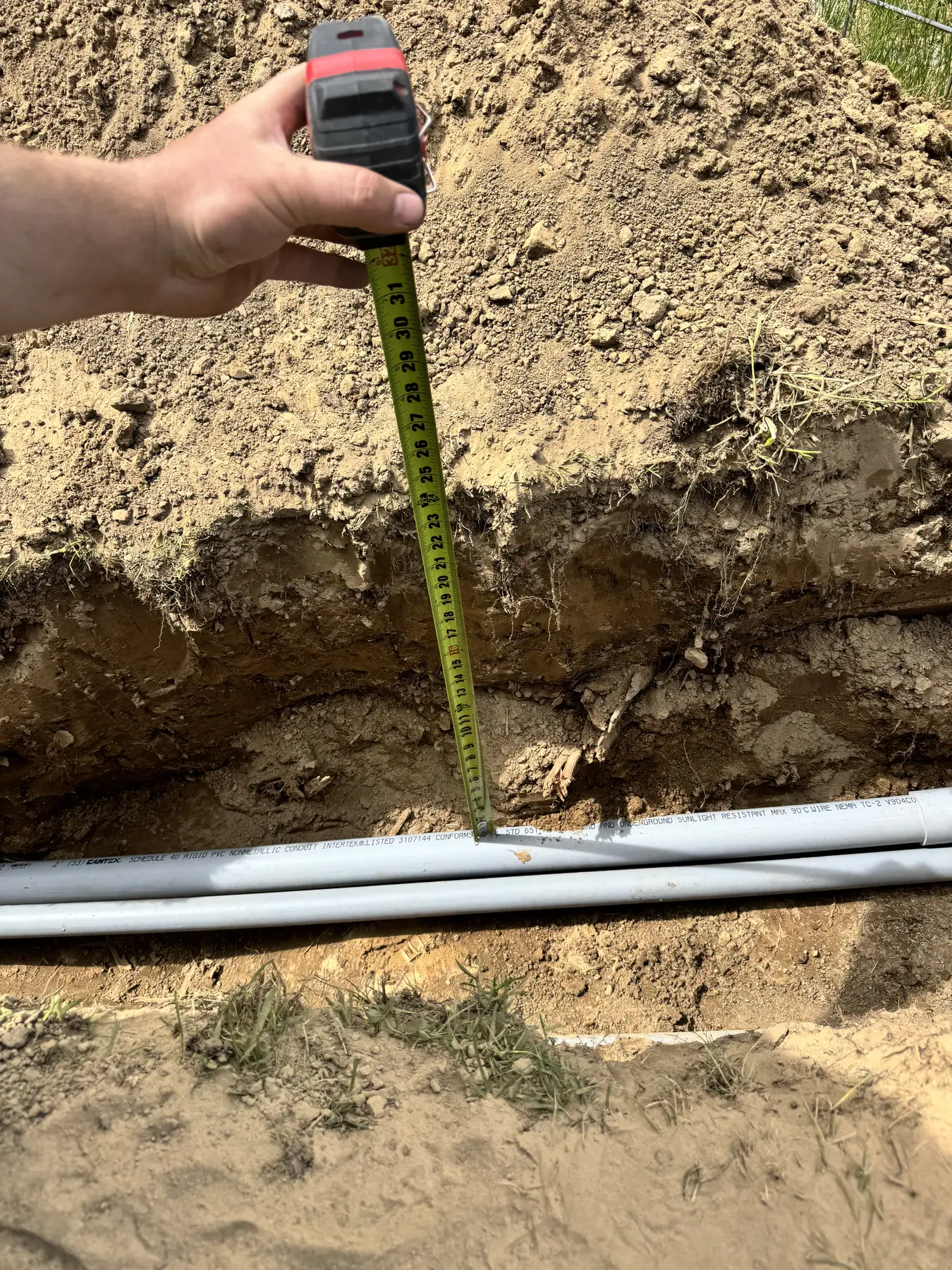
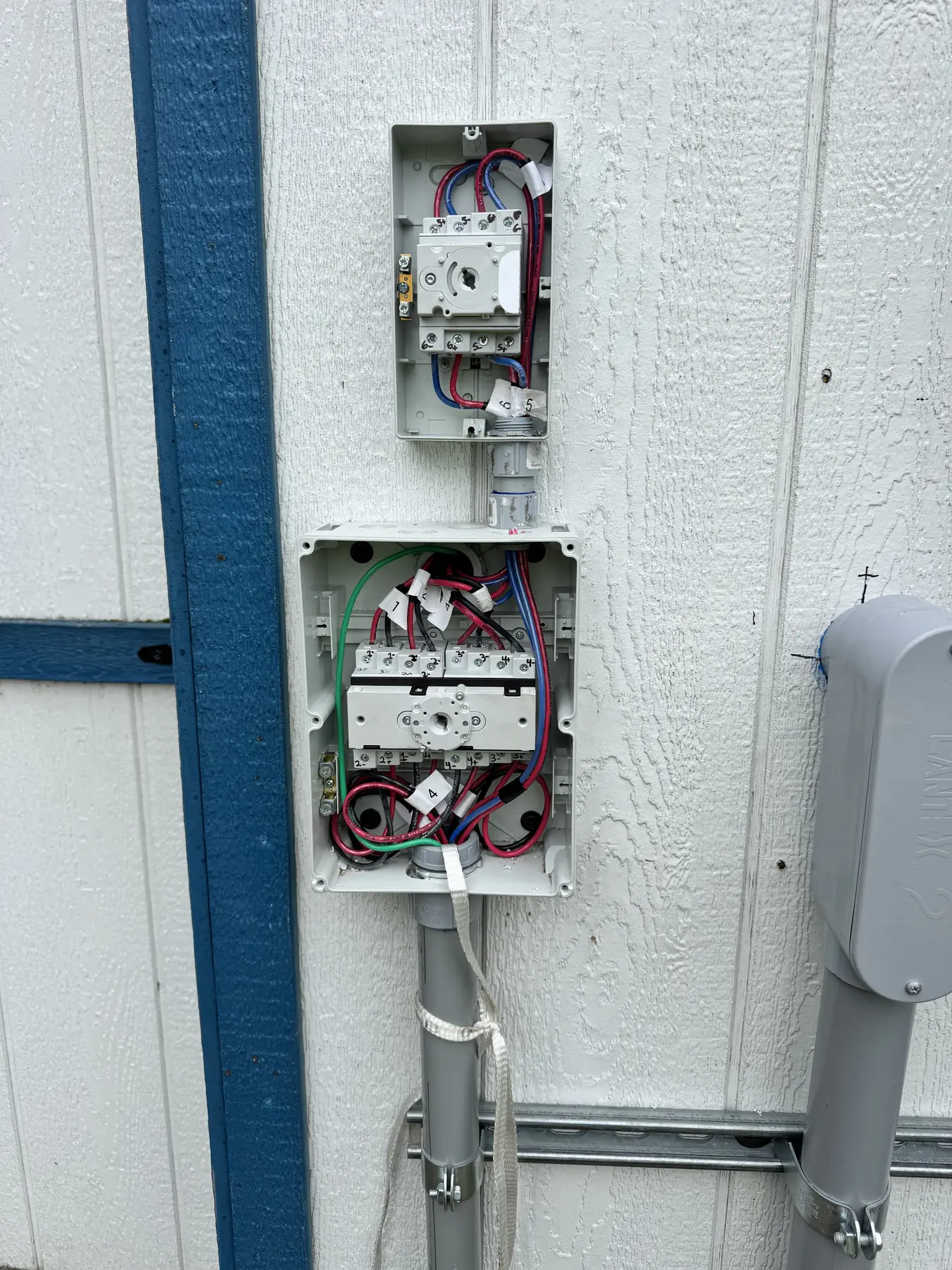
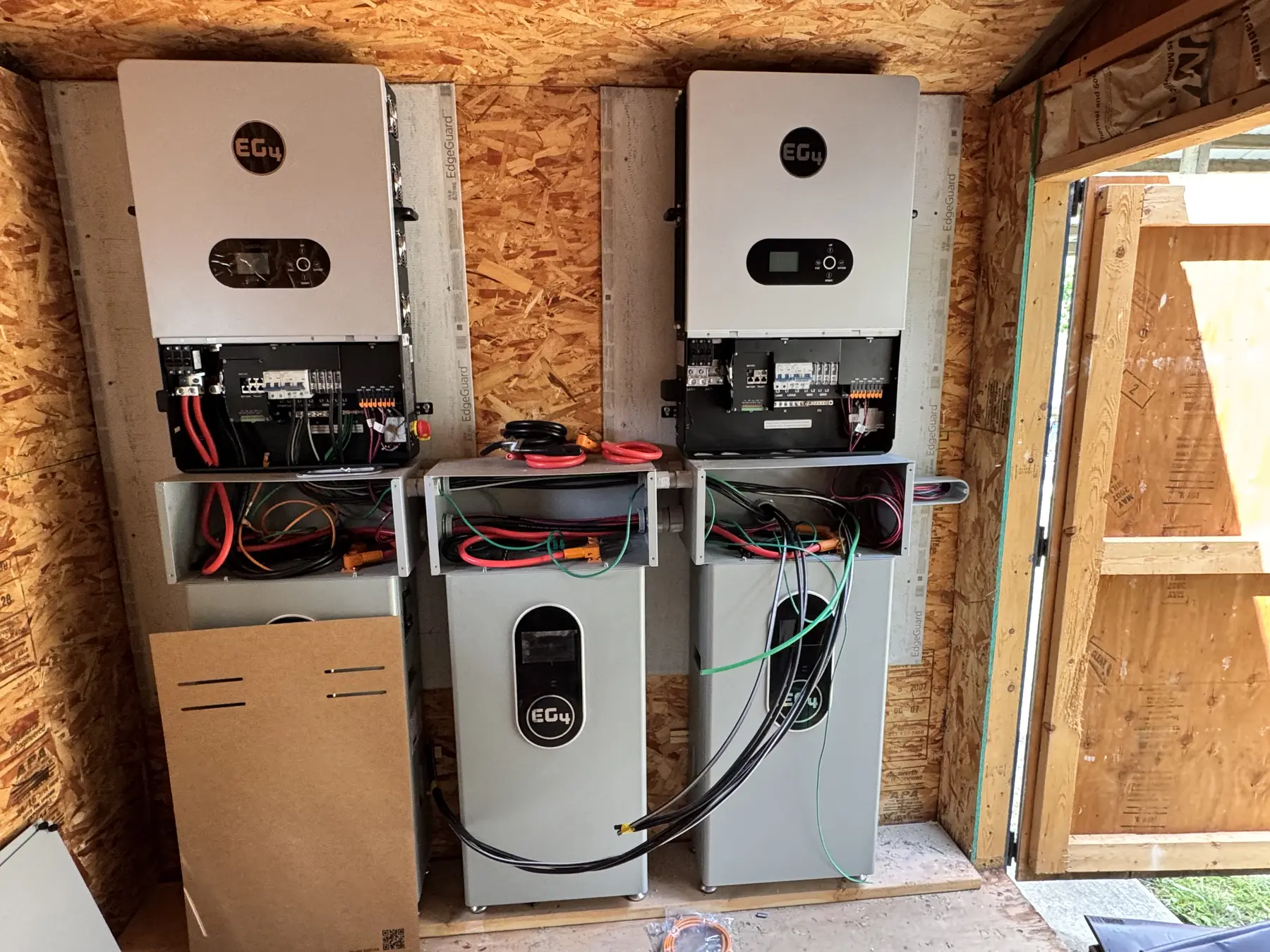
The equipment-side work brought the array connections, disconnects, junction points, inverters, and wall batteries together. Conductors were kept identifiable and equipment was arranged with access, serviceability, and later troubleshooting in mind.
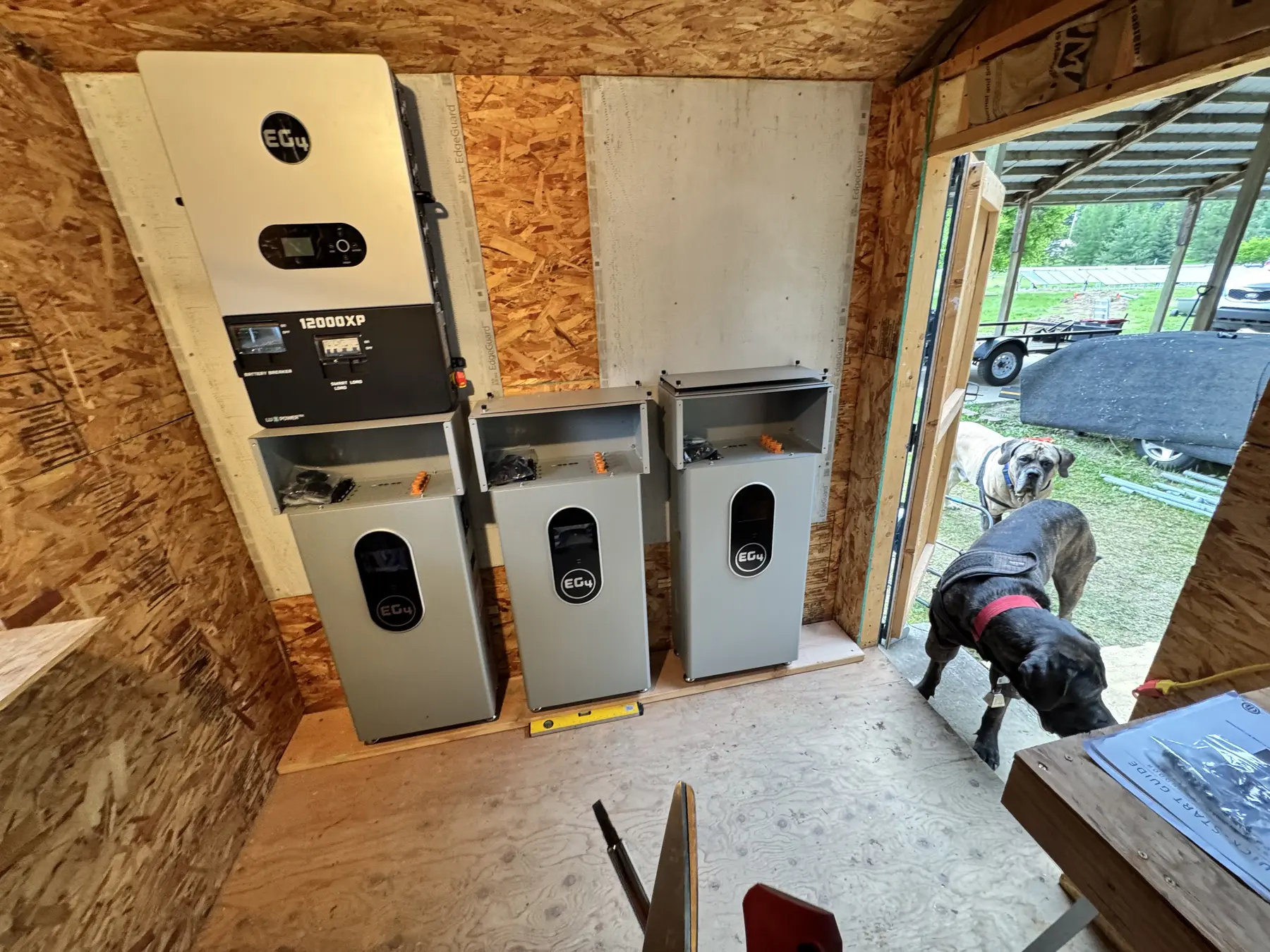
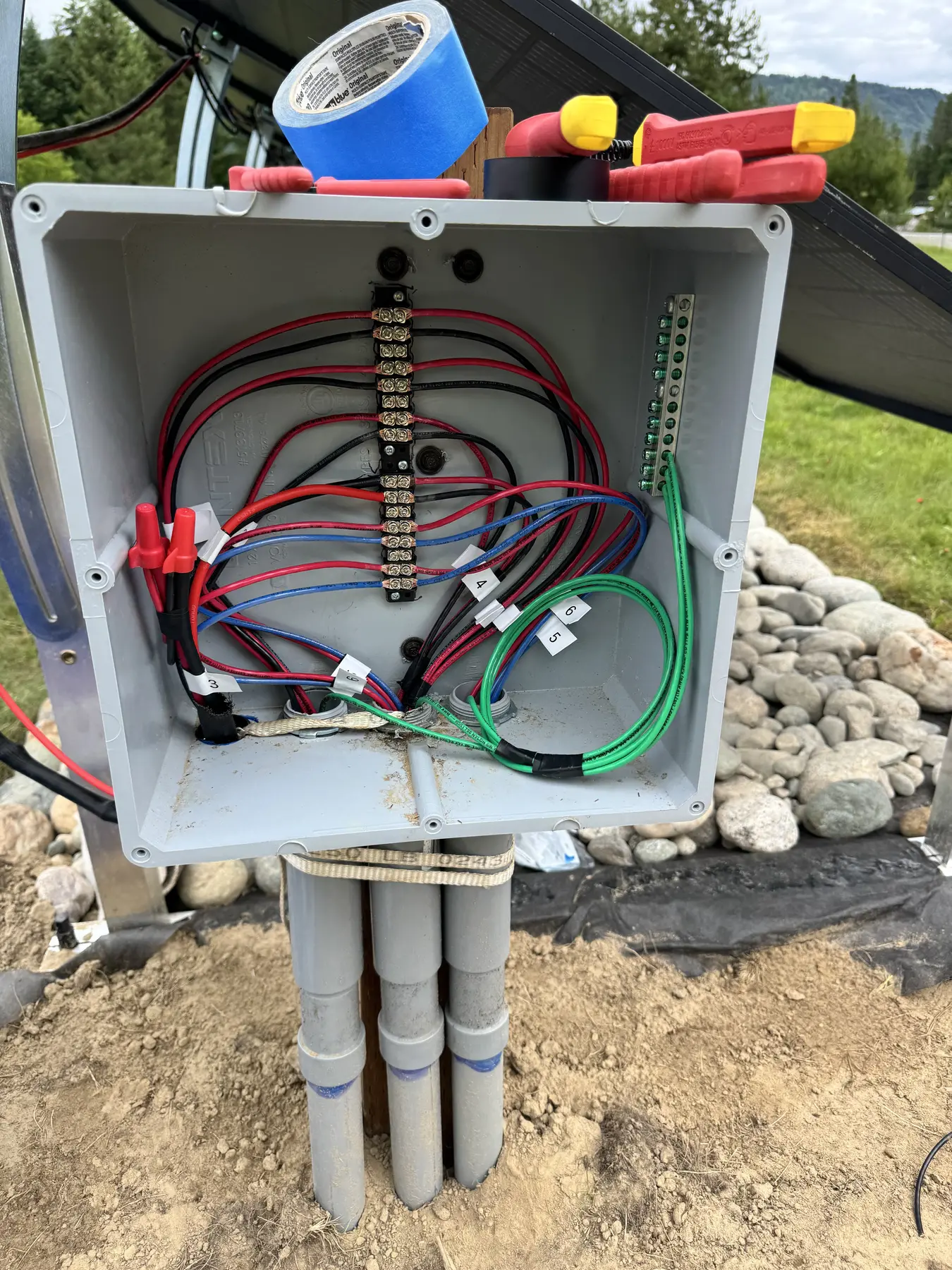
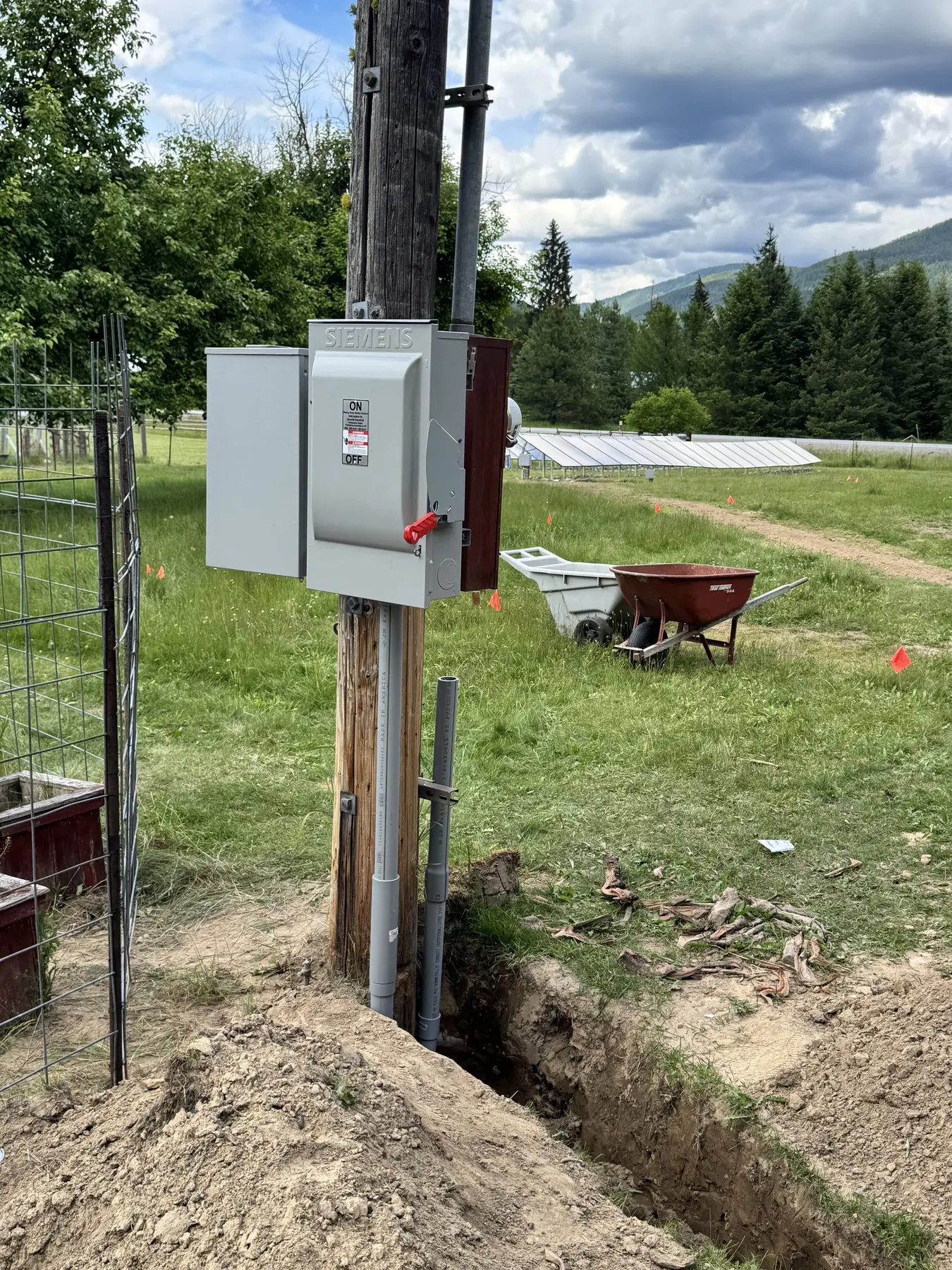
The last phase focused on the details that remain after the heavy work is finished: restoring the trench route, completing equipment-side connections, labeling conductors, and leaving the system in a state that can be understood and serviced later.
Finished result
The project came together as a complete system—from the two long panel rows in the field to the labeled connections and finished equipment wall—while keeping future inspection and troubleshooting in view.